
— SOCIAL PLATFORM
Odyssey — social media built for people.
Not built for advertisers. Not built for engagement metrics. Built for the people who use it.
— WHY THIS VISION EXISTS
The social media industry has spent fifteen years building platforms that are profitable and genuinely harmful. They have had every resource and every opportunity to fix it. They haven't — because fixing it would cost them money. Odyssey exists because the incentives of the current model cannot produce a healthy platform. The only way to get one is to build from different principles, from the ground up.
VISION STATUS
Concept + Funding
PLATFORM
IOS + Android + Web
TARGET MARKET
North America → Global
WONDER INDEX
★★★★★
— THE PROBLEM NOBAODY WANTS TO ADMIT
The platforms that billions of people use every single day were not built to help you connect with others or live a better life. They were built to keep your eyes on a screen as long as possible so advertisers could pay to put things in front of you. Every feature you interact with — the like button, the algorithm, the endless scroll — exists to serve that goal. Not yours.
Social media is broken.
Not by accident — by design.
Confirmation Bias & Belief Silos
When an algorithm figures out what you already believe and feeds you more of it, you stop being exposed to different ideas. This is not a side effect — it is the product working as intended. Outrage and strong emotion keep people scrolling longer, so the algorithm optimizes for outrage. You become more divided from the people around you. By design.
A Generation Addicted to Validation
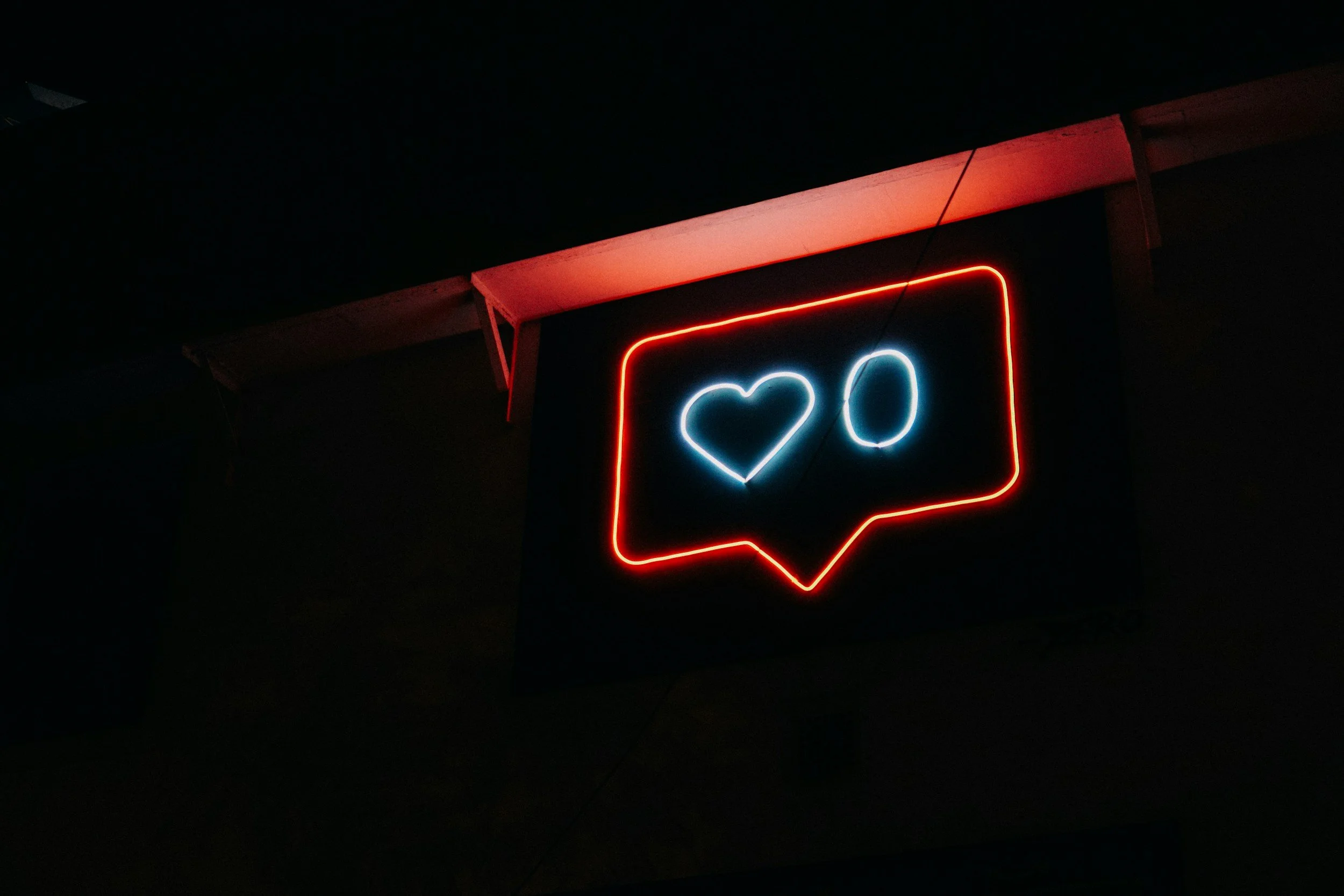
The like button was one of the most damaging inventions of the last twenty years. When your sense of self-worth becomes tied to how many people double-tap your photo, you are no longer sharing because it is meaningful — you are performing for approval. We handed teenagers a machine that scores their social value in public, and then acted surprised when it hurt them.
Users Are the Product, Not the Customer
On every major social platform today, the person using the app is not the one the company is actually serving. Advertisers are the customers. Users are the inventory. Your attention is bought and sold without your meaningful participation or reward. The relationship between platform and user is fundamentally extractive — and it has been from the beginning.
MORE LIKELY
3.5x
Heavy social media users are 3.5× more likely to report feelings of social isolation
OF TEENS
66%
Report feeling worse about their lives after comparing themselves to others on social media
USER COMPENSATION
$0
Amount the average user receives for the attention data sold on their behalf to advertisers
— WHAT ODYSSEY IS
Odyssey is a social sharing platform where people post, connect, and engage — without the like button, without the dopamine trap, and without an algorithm designed to divide them. It is not reforming the current model. It is replacing it.
A social platform that respects the people who use it.
01: No Likes — Core Principle
There are no public like counts on Odyssey. Not hidden likes — gone entirely. We are removing the scoreboard. People will still be able to express that something resonated with them, but it will not be displayed as a running public tally that defines how much the poster is worth. Content stands on its own. You share because you want to — not because you're chasing a number.
02: A Healthier Reason to Post — Design Philosophy
Without likes, the question becomes: why would anyone post? The answer is the whole point. People should post because it is fun. Because they want to remember something. Because they want to share a moment with people they care about. Odyssey builds features that make sharing feel rewarding on its own — memory collections, storytelling tools, shared experiences with friends — so the platform feels more like a personal journal and community scrapbook than a performance stage.
03: An Algorithm That Serves the User — Architecture
Without likes to optimize around, Odyssey's content system surfaces posts based on genuine engagement signals — time spent with content, comments, shares, and direct responses between people who actually know each other. The goal of the algorithm is to show you things that are interesting, meaningful, or from the people you care about — not things that make you angry or afraid so you will keep scrolling.
04: Perspective Diversity Built In — Innovation
One of Odyssey's core design commitments is to deliberately break the belief silo. The platform will occasionally and thoughtfully introduce users to content and perspectives they would not normally seek out — not to provoke, but to humanize. You should finish a session on Odyssey knowing something you did not know before, or having understood someone different from you a little better. This is the direct opposite of what current platforms do.
"We are building for people who are tired of feeling worse after using social media. For parents worried about what these platforms are doing to their kids. For anyone who remembers when sharing a photo online felt like a genuine human moment rather than a competition."
— THE CORE COMMITMENT
Published and enforceable.
✓ We will never sell your personal data to third parties.
✓ We will never optimize our algorithm to increase your anxiety or outrage.
✓ We will never use your engagement to measure your social worth.
✓ We will always be transparent about how content is surfaced and why.
✓ If we ever change these commitments, we will tell you clearly before we do it.
— HOW EDYSSEY MAKES MONEY
This is the question every investor will ask, and it deserves a direct and honest answer. Social media platforms are expensive to run. Odyssey is not pretending otherwise. However, there is a way to build a sustainable business without exploiting the people who use it — and the Brave browser has already proven part of the model.
A sustainable business
without turning users into a product.
Ethical Advertising + User Rewards
Users who opt into ads receive direct rewards — platform credits, digital currency, or tangible perks — for their attention. This makes the relationship between user and advertiser honest and consensual. Users who chose to view your ad are worth exponentially more than distracted users who scroll past.
Inspired by Brave Browser model.
Premium Membership
A small percentage of users will pay for an enhanced experience — additional storage, premium memory tools, custom features, and a completely ad-free environment. Not the primary model, but a meaningful revenue layer for users who want full control over their experience.
Opt-in, not paywalled.
Ethical Brand Partnerships
Brands that associate with a platform built around mental health and authentic connection are positioning themselves as trustworthy — which is rare and valuable. Odyssey offers quality of attention over quantity, in a positive-headspace context rather than the anxiety-and-outrage environment current platforms sell.
Contextual, not behavioral.
"Odyssey will likely grow more slowly than a platform that uses every psychological trick available to manufacture addiction. That is a deliberate choice. A smaller, genuinely engaged user base that trusts the platform is a more durable business than a massive, miserable one that is one scandal away from leaving."
— THE DESIGN APPRAOCH
How I would build it.
Odyssey is the Vision in this collection that is closest to a product I could begin building today. The design challenges are real and solvable. Here is how I would approach them.
01: Start with the Human Research, Not the Feature List
Before designing any interface, I would spend 3–4 months conducting deep qualitative research with people who have left social media, people who wish they could leave, parents of teenagers, and mental health professionals who work with social media-related anxiety. The design must be informed by the actual harm being done — not assumptions about it. I want to sit across from the people Odyssey is being built for before drawing a single screen.
Deliverable: Research synthesis + design principles grounded in real testimony
02: Design the No-Like Experience — What Fills the Void
Removing the like button is easy. Replacing the human need it was exploiting is the hard design challenge. People want to feel seen and responded to — that need doesn't disappear, it needs to be redirected toward healthier expression. I'd run prototype tests with small groups to find what makes sharing feel rewarding without a public validation counter. Likely answer: deeper, more private, more meaningful responses from fewer people rather than shallow reactions from many.
Deliverable: No-like UX model + qualitative validation
03: Build the Perspective Diversity Engine Carefully
Introducing content that challenges your worldview is a delicate UX problem. Done wrong, it feels like being lectured. Done right, it feels like discovering something. I would prototype this with small user groups, testing how often, in what contexts, and in what framing perspective-diverse content can be introduced without triggering defensiveness or abandonment. The goal is curiosity, not confrontation.
Deliverable: Diversity feature prototype + moderated testing findings
04: Design the Ethical Ad Experience — Make It Worth Opting Into
The opt-in ad model only works if opting in feels genuinely worthwhile. The ad experience itself must be designed to be useful, respectful, and rewarding — not tolerable. This requires working closely with brand partners who believe in the model, and building a reward structure that users actually value. The test: would a user recommend the ad experience to a friend? That's an absurdly high bar, and the right one.
Deliverable: Ethical ad UX spec + reward system design
05: Closed Beta with a Specific, Chosen Community
Odyssey's first users should not be the general public — they should be a carefully selected group of people who represent the audience it is being built for: former heavy social media users, parents of teens, mental health advocates, and people who care deeply about the problem. Their feedback during beta shapes everything. This is not a test of the technology — it is a test of whether Odyssey actually makes people feel better. That is the only metric that matters in Phase 1.
Deliverable: Beta program design + wellbeing measurement framework
— LAUNCH ROADMAP
Phase 01: Months 1–18
Build & Beta
Core platform development
Closed beta — selected user group
Refine no-like posting experience
Build perspective diversity features
Wellbeing measurement framework
Phase 02: Months 18–30
Public Launch
Open access launch
Ethical advertising partners onboarded
Community growth strategy
Premium membership rollout
Public commitment transparency report
Phase 03: Month 30+
Scale
International expansion
Feature expansion from real feedback
Long-term revenue diversification
Policy & governance formalization
Youth-specific safety features
— HONEST CHALLENGES
What makes this genuinely hard — and how I'd explore solutions..
Building a social platform that competes with trillion-dollar incumbents while refusing to use the psychological tools they depend on is not a small challenge. These are the real obstacles — held without flinching.
-
A social network with no users is not a social network.
Every social platform faces the same existential question at launch: why would a user join a platform where none of their existing social connections are? The value of a social network is almost entirely derived from who else is on it. Without critical mass, Odyssey is a beautiful, ethical ghost town. No amount of principled design solves an empty feed.
How I'd explore this
Design community-first onboarding — Odyssey launches around specific, existing communities (parenting groups, creators burned out by follower metrics, mental health advocates) rather than trying to onboard individuals. One tight, passionate community provides more genuine value in early launch than ten thousand disconnected users. Study how Discord, Reddit, and BeReal solved cold-start through community specificity rather than mass acquisition. The first 10,000 users matter more than the next 10 million. Choose them deliberately.
-
And how do you measure retention?
The like button works as a retention mechanism because it creates variable reward — you never know if the next check will have more or fewer likes than the last. Remove that mechanism and you also remove one of the most powerful behavioral hooks keeping users engaged. Without a replacement engagement mechanism that is equally compelling but psychologically healthier, Odyssey may struggle to build daily active usage habits.
How I'd explore this
The replacement for dopamine hits is genuine human connection — harder to engineer but more durable. Design features that create meaningful reciprocity: memory threads that resurface past shared moments, collaborative storytelling with close friends, private response spaces that feel like real conversations rather than public performance. Measure success not by DAU but by relationship depth — do users report feeling more connected to specific people they care about? That is the metric Odyssey is optimizing for, and it is the right one to build a retention strategy around.
-
The current advertising infrastructure — programmatic buying, behavioral targeting, third-party data — is what most brands and their agencies know how to buy. Odyssey's ethical model requires brands to think differently about attention quality versus quantity, to accept less behavioral targeting, and to pay a premium for a smaller but more engaged audience. Most marketing teams are not incentivized to make this argument internally, even if the logic is sound.
How I'd explore this
Target early advertising partners from the specific category of brands that are already positioning around trust, mental health, and authenticity — wellness brands, family products, independent creators, companies whose brand identity conflicts with being associated with the anxiety-and-outrage environment of current platforms. Build robust case study data from the beta period showing attention quality metrics. The pitch is not "reach more people" — it is "reach the right people in the right state of mind, with their explicit consent." That is a genuinely differentiated and defensible advertising product.
-
A healthier platform still needs to handle bad actors.
Removing the like button and changing the algorithm reduces certain categories of harm, but does not eliminate the need for content moderation. Harassment, misinformation, and harmful content will reach any social platform. The design challenge is building moderation systems that are consistent, transparent, and scalable — without the massive content teams that only trillion-dollar companies can afford, and without the bias and inconsistency that has undermined trust in existing platform moderation.
How I'd explore this
Design moderation as community-first, platform-second — invest deeply in tools that give users and communities the ability to manage their own spaces before escalating to platform-level intervention. Publish a clear, plain-language moderation policy and build a transparency report from day one. Explore a community review layer — trained volunteers drawn from the user base, structured like Wikipedia's editorial model — as a cost-effective and legitimacy-building alternative to pure algorithmic or centralized human moderation. Moderation policy should be designed in public, with user input, before the platform launches.
-
Funding a mission-driven platform in a VC landscape.
Traditional venture capital is optimized for hyper-growth and exits — incentives that are structurally in tension with building a platform that deliberately grows more slowly in service of user wellbeing. The history of mission-driven startups that took VC funding and compromised their founding principles under growth pressure is long. The risk is not that Odyssey fails to build something good — it's that it builds something good and then is forced to undo it.
How I'd explore this
Pursue alternative capital structures from the outset — patient capital, impact investors, community ownership models (cooperative or public benefit corporation structures), and potentially a community funding round that gives early users a stake in the platform's success. Study how Kickstarter's Public Benefit Corporation structure and REI's cooperative model have maintained mission alignment under financial pressure. The governance structure of Odyssey must be designed to make it structurally difficult — not just culturally unlikely — to compromise the founding commitments in exchange for growth metrics.
— MY DESIGN LENS
The platforms that billions of people use every single day were not built to help you connect with others or live a better life. They were built to keep your eyes on a screen as long as possible so advertisers could pay to put things in front of you. Every feature you interact with — the like button, the algorithm, the endless scroll — exists to serve that goal. Not yours.
The principles behind the vision.
People Over Metrics
Every platform decision — feature, algorithm, business model — is evaluated by a single question: does this make the people who use Odyssey feel better, or worse? If the answer is worse, it doesn't ship, regardless of what it does for engagement numbers.
Symmetricism Applied
The current social media model shows you only the curated highs of other people's lives — a deeply asymmetric and distorted view of reality. Odyssey is designed for the full, honest, unglamorous experience of being human. That balance is healthier than the highlight reel.
Commitments as Architecture
The core user commitments are not marketing copy — they are structural constraints baked into the platform's governance and where possible its code. Making it technically and legally difficult to break the founding principles is the only protection that matters under pressure.
— MY DESIGN LENS
The principles behind the vision.
— CONNECTED TO PROJECT WORLDFAIR
The most urgent exhibit in a great big wonderful tomorrow.
Project Worldfair is a vision of wonder, innovation, and the extraordinary things humanity is capable of when it aims high. Odyssey belongs in Worldfair not as a speculative dream but as a practical demonstration of a core belief: that technology built around human dignity is not just ethically preferable — it is strategically smarter, more durable, and more worth building.
If Worldfair is about showing what tomorrow can look like, Odyssey is about fixing what today is breaking. It is the exhibit that proves you don't have to choose between a sustainable business and a platform that treats people as ends in themselves rather than means to an ad impression.
— VISION TIMELINE
Where Odyssey stands today.
CURRENT STAGE
Concept & Funding
Odyssey is fully formed as a vision, business model, and set of design principles. The next stage is identifying co-founders, initial funding from mission-aligned sources, and beginning the research phase before any product work begins.
WHAT EXISTS NOW
This Proposal
A complete vision document, business model, three-phase roadmap, and a set of published user commitments. The intellectual foundation is in place. The build phase requires the right team and capital structure.
WHAT’S NEXT
Team & Capital
Identify a technical co-founder who believes in the mission, seek seed funding from impact investors and patient capital sources, and begin the human research phase before any feature design begins.
ESTIMATED TIMELINE
18 months
Closed beta within 18 months of funding and team formation. The first version doesn't need to be feature-rich — it needs to prove the core thesis: people feel better using Odyssey than they do using anything else.